 biz59
Articles
Notes on what we see in AI, software and startups, with the sources we used.
Moving a ten-person office's shared drive and file permissions between Google Drive and SharePoint: the audit before and after
A practical permission audit for ten people moving either way: role mapping tables, why external links break, the 318 links in a typical 150 GB audit, GAM and PowerShell audit scripts, and the 5-persona permission test before staff log in on Monday.

State taxes for a foreign-owned US LLC: what California, New York and Texas actually charge when you live abroad
A Wyoming or Delaware LLC owned from abroad can still meet California's $800 tax, New York's filing fee and Texas's franchise report. The real tests with 2025-2026 numbers, a worked $180,000 SaaS example, and what registering in all three costs.

Chargeback representment: the evidence pack a small SaaS submits to win digital dispute arbitrations
Visa reason codes 10.4 and 13.1 versus Mastercard 4837 and 4853; what dispute analysts at card issuers actually review in 90 seconds; the four-part evidence pack that proves digital delivery; win rates for monthly versus annual subscriptions; and when the network arbitration fee is worth the risk.

Paying a contractor in Poland, India or the Philippines: what the US side files (1099-NEC or not, W-8BEN, FBAR) and what the local side expects
No 1099, one form kept on file, and the cases that change that. W-8BEN validity, the $2,000 1099-NEC threshold, when 1042-S and FBAR apply, the PE and misclassification lines in Poland, India and the Philippines, and a year of paperwork for three contractors paid $120,000.

Bidding on a German public software tender as a small foreign vendor: self-declarations, comparable certificates and the question round
What German law lets a buyer ask of a small foreign software bidder, read against two live TED notices from October 2026: the EUR 216,000 and EUR 140,000 thresholds, the 2x turnover cap, three-year references, which papers can be fixed after the deadline, the equivalence rule for certificates and the 6-day question deadline.
Paying yourself from a US LLC when you live abroad: distributions, the W-8BEN and how five home countries tax it
How non-US founders withdraw money from a single-member US LLC. Why you cannot pay yourself a W-2 salary, how owner draws work via ACH and Wise, the W-8BEN-E and W-8BEN paperwork for Stripe and B2B clients, Form 5472 Part V lines 19-20, and the transparent vs opaque company tax trap across the UK, Germany, Canada, Australia and Portugal on $60,000 profit.

BSI C5 for a small SaaS selling into German healthcare: what section 393 requires, who audits it and what Type 1 and Type 2 cost
Since 1 July 2025 section 393 SGB V asks for a C5 Type 2 attestation for cloud services that handle patient data; new systems get 18 months on Type 1. A dated calendar for a December 2026 launch, who may audit, the published price ranges (EUR 5,000 to 25,000 gap analysis, 40,000 to 120,000 attestation), what a host's report does not cover and how C5:2026 changes the plan.

security.txt and a disclosure policy for a small SaaS: the free page that catches what a yearly test misses
The RFC 9116 security.txt file (only Contact and Expires are required), a one-page disclosure policy with safe-harbour wording, the six beg-bounty claims and a reply for each, inbox numbers from the Pentagon, CISA and curl programs (curl's valid rate fell from over 15% to under 5%), and why a managed bounty costs 3.5 to 10 times a yearly penetration test.

Switching a ten-person office between Google Workspace and Microsoft 365: the migration weekend, the tools and what breaks
A step-by-step plan for moving ten people either way: the free tools (Exchange batch migration, Migration Manager, Google's data migration service) against MigrationWiz at $14 a user, the MX and SPF cutover timeline, a table of what does not move, a 46.5-hour budget and the overlap bill, from $147 to $1,827 depending on months left on the old annual plan.

info@ and support@ without a paid seat: shared mailboxes in Microsoft 365 and Google Workspace for a ten-person business
How a ten-person company sets up info@, support@ and invoices@ without paying $216 to $648 a year for empty seats. Microsoft 365 shared mailboxes (free up to 50 GB, sign-in blocked) vs Google Groups Collaborative Inbox and delegation, send-as permissions, reply collisions, licensing traps, and when a dedicated helpdesk is worth it.

UK VAT for a non-UK software company: the first-pound rule, quarterly returns and what an agent costs
A non-UK SaaS selling to UK consumers has no GBP 90,000 allowance. Here is the 30-day registration rule, B2B reverse charge, MTD filing calendar, published 2026 agent fees, and the cost of own filing against a merchant of record at GBP 3,000 and GBP 30,000 a month.

SPF, DKIM and DMARC for a ten-person business in 2026: why invoices land in spam and the three DNS records that fix it
Why invoices sent through QuickBooks, Stripe or a CRM silently land in customer spam folders, the 10-lookup SPF limit that breaks email delivery, worked DNS records for your domain, and the 4-step path to p=reject.

The first foreign subsidiary of a small US company: cost-plus transfer pricing, the markup tax offices accept and the yearly paperwork
Why a service subsidiary bills its US parent cost plus a markup: India's published 15.5% safe harbour, Poland's 5% rule that does not cover software development, the Philippines' lack of one, the Form 5471 penalty ($10,000, up to $60,000 a year), local thresholds, and a worked year for a five-person Indian subsidiary with a year-end true-up.

The billing contact: who gets the invoice, the failed-payment email and the renewal notice at a small SaaS's business customers
When the card holder is not the user, Stripe, Chargebee and Paddle send billing mail to one address. What each can add, a failed annual renewal day by day, PO and net-30 handling, and a worked churn model with the arithmetic.

Deferred revenue at a small SaaS: a $12,000 annual prepayment, month by month, and what a buyer subtracts
One $12,000 annual subscription, all 12 monthly entries, the $8,000 unused-service refund, QuickBooks and Xero workflows, cash-versus-accrual tax timing, and three deal treatments that move the seller's cheque by $75,000.

ISO 27001 or SOC 2 when the customers are in Europe: costs, timelines and which one a German or Dutch buyer asks for
We counted two years of EU software tenders: ISO 27001 in 1,202 German procedures, SOC 2 in 49, and most of those accept it only as an alternative. What each costs a ten-person vendor over three years ($104,500 and $114,000), surveillance audits, C5 and NEN 7510, and running both on one control set.

The first penetration test for a small SaaS: what $5,000 buys, what $25,000 adds, and what buyers read in the report
$5,000 is two to four tester days and $25,000 is nine to twenty. Published 2026 prices, a worked budget for a small SaaS, how to spot a scan with a cover page, what goes in a letter of attestation, and how to show your findings to a customer.

Accessibility demand letters: what a small business website gets sued for in the US and what the EU changed in June 2025
5,114 US suits in 2025, 64% against companies under $25 million in revenue. Counts by year and state, what a claim settles for, the $1 million FTC order on overlay widgets, who the European Accessibility Act exempts, and a WCAG 2.2 check you can run in an afternoon, with our own results.

Google Workspace or Microsoft 365 for a ten-person business in 2026: the bill after AI was bundled in
Both suites now list at $7, $14 and $22 a user. The before-and-after prices (Gemini in January 2025, Microsoft's July 2026 rise), a ten-seat yearly bill for every plan paid up front, monthly or month to month ($840 to $3,840), what each tier adds, where the included AI stops, and which plan fits which office.
A US LLC for a founder abroad: Stripe Atlas, Firstbase and doola costs, and the yearly filings that carry a $25,000 penalty
Forming a US LLC from abroad costs $153 to $2,099 in year one and $85 to $2,059 a year after, depending on the route. Stripe Atlas, Firstbase and doola prices on 1 November 2026, Delaware ($400 a year) against Wyoming ($60), the EIN without an SSN, the Form 5472 and pro forma 1120 every foreign-owned LLC files by 15 April or risks $25,000, the end of BOI reports for US companies, Mercury and Wise, and five-year totals.
EU VAT for a non-EU software company: the OSS registration, the zero threshold and what it costs to file
A non-EU company owes VAT on its first euro of software sold to EU consumers: there is no EUR 10,000 allowance outside the EU. The rate in all 27 countries, registering for the non-Union OSS in Ireland, the 10th-day rule, the quarterly return worked through, the evidence of customer location, reverse charge for business customers, and what filing yourself costs against Paddle, Lemon Squeezy, Polar, Creem and Stripe Managed Payments at EUR 5,000 and EUR 50,000 a month.

SOC 2 for a five-person SaaS: what the audit costs and when a customer really needs it
Type 1 or Type 2, what Vanta, Drata and Secureframe sell for in 2026 (Vendr medians of $20,000 to $24,934 a year), auditor and pen test fees, a full year-one budget for five people ($36,500 to $46,500 in cash), what a bridge letter can and cannot do, which buyers stall without the report and the break-even deal size.

Support with two people: the response times customers expect from a small SaaS and how to meet them
Published benchmarks (62% of companies never answer an email; a one-hour first reply puts a SaaS in the top 15%), what Plausible, Transistor, Buttondown and Fathom promise, how two people cover a week without 63-hour Friday gaps, 2026 prices of shared inboxes, help desks and AI replies ($0.75 to $2.00 a resolution) with a worked example, where an AI answer angers customers, and six numbers to check every Monday.

The first salesperson at a small SaaS: when to hire, what to pay and how long until they earn it back
The signs founder-led sales has done its job (10-20 referenceable customers, a 15-25% win rate), 2026 pay and quota norms (median AE OTE $200,000, quota 4.6x OTE, 48% at quota, 6.2-month ramp), a month-by-month payback for a $12,000-a-year product (month 15 to 21 depending on attainment), the commission clauses that matter, a 90-day plan and the signs it isn't working.

Backups for a ten-person business: what Google Workspace and Microsoft 365 don't keep, and what a restore costs
Google keeps a deleted file about 55 days and a removed user 20; Microsoft keeps files 93 days, email 14 and a removed user 30. The day-by-day windows, two cases where they were not enough, 2026 backup prices for ten people ($360 to $1,057 a year), what a slow restore costs and a drill to test yours.

A developer in another country: contractor, employer of record or your own entity, with 2026 costs
The same $5,000-a-month developer costs $5,030 as a contractor and $5,740 in India, $6,623 in Poland or $8,143 in Brazil through an employer of record. Deel, Remote and Oyster 2026 prices, employer charges by country, Poland's July 2026 reclassification rules, the IP clauses that decide who owns the code, payment fees and when to switch routes.

Annual or monthly: the discount that pays for itself at a small SaaS
What Zoom, Slack, Calendly, Notion and Shopify take off for annual (16.7 to 24.8 per cent), how many customers choose it (ChartMogul's 2024 data), the retention gap, and a worked $29 plan: year-one revenue, the break-even discount, the cash that is not revenue yet, refund rules and the renewal notice.

Why they cancelled: the exit questions a small SaaS asks and what the answers change
Between a fifth and a third of a small SaaS's lost customers never chose to leave: their card failed. Stripe's and Recurly's churn splits, why renewals fail (40.6% insufficient funds), what retries and emails recover (51% to 70%), the one exit question to ask, published save rates, the California cancel-button rule, a worked 500-customer example and a one-page monthly churn review.
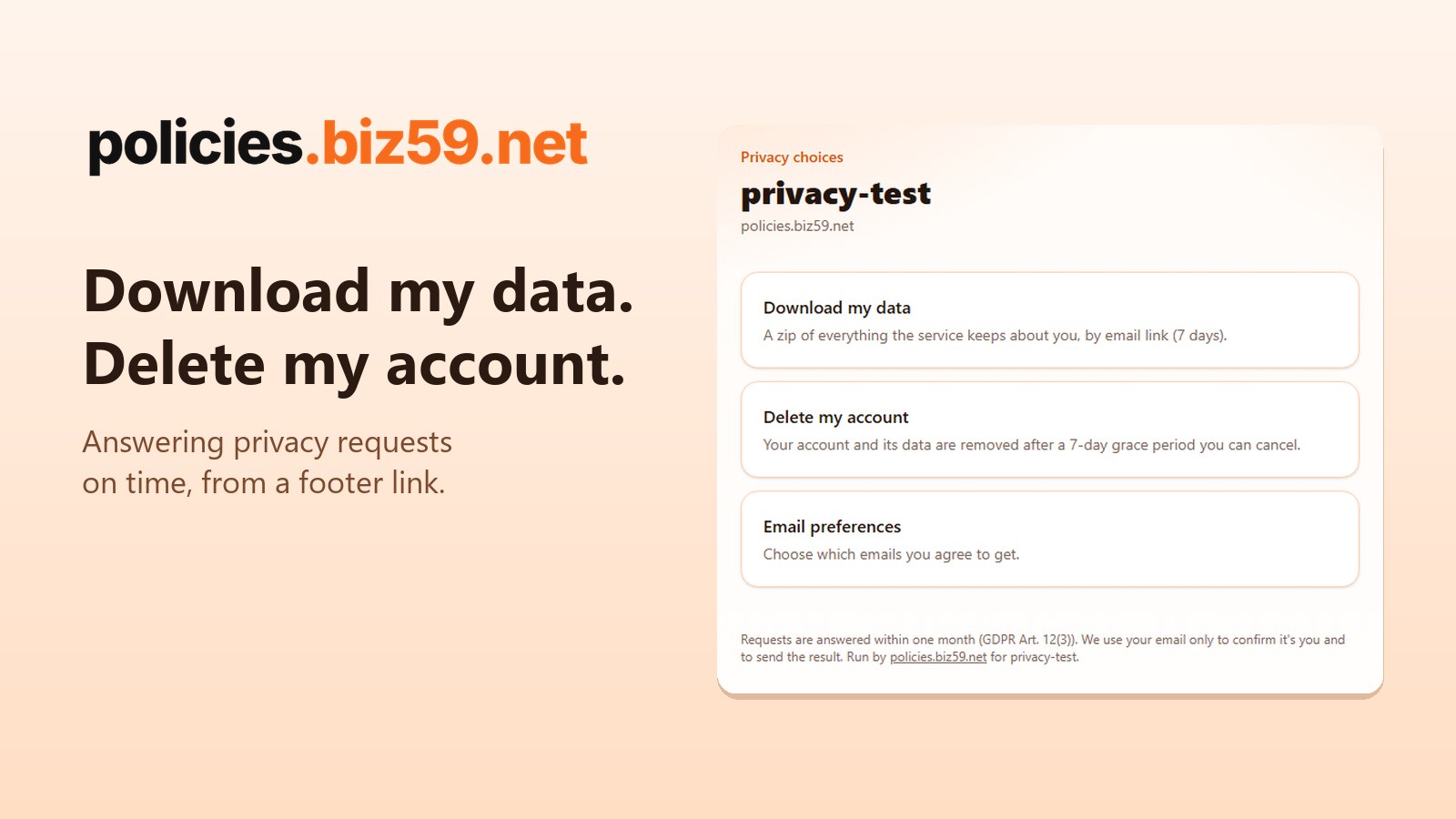
Download my data, delete my account: answering privacy requests on time
Someone has asked for a copy of their data, or to be deleted. GDPR gives you one month, California 45 days. What the answer must contain, where one person's data hides, what you may keep after a delete, a worked timeline, and how to run it from a footer link without building an admin panel.

Offboarding the last day: the accounts, keys and devices a ten-person company takes back when someone leaves
Five dated cases where a leaver's access stayed on, an eight-item leaver sheet, the last day hour by hour (money and admin first), what Google Workspace (20 days) and Microsoft 365 (30, 60, 93 and 365 days) do with a removed user's mail and files, and what a forgotten account costs, from $0 to a $150 OneDrive reactivation.

Section 174 is fixed: the R&D tax credit and expensing for a small US software company in 2026
What the July 2025 law changed for software development costs (deductible again from 2025, the 2022-2024 balance written off over one or two years), who qualifies for the research credit, how a startup takes up to $500,000 a year of it against payroll taxes, a six-person company worked through ($699,000 of research costs, a $73,360 credit used over five quarters), the records courts ask for, what specialists charge and nine questions for your accountant.

A cloned voice asks for a wire: the payment checks a small business adds against deepfake fraud
Real cases from the EUR 220,000 voice clone of 2019 to Arup's $25.6m video call, the 2025 loss figures (FBI: $3.05bn to business email compromise; UK CEO fraud averaging GBP 28,000 a case), and five checks that cost a 12-person company about $300 a year: call back on a known number, two approvers, a code word, the bank's name check and a one-day hold on changed details. Plus the first hour after a payment goes wrong.

Sales tax on software subscriptions: which US states tax SaaS and when a small vendor has to register
About 21 states and DC tax SaaS in October 2026, and California and Colorado join on 1 January 2027. The state-by-state table, the economic nexus thresholds after Wayfair, a $49-a-month business with 2,000 customers worked through (it owes Ohio and Maryland, not Texas or New York), what Paddle, Stripe Tax and Stripe Managed Payments cost at $1.18m a year, and the first three registrations a small vendor usually needs.

Chargebacks at a small SaaS: what a dispute costs and which ones you can win
Dispute fees at Stripe ($15 plus a $15 counter fee since June 2025), PayPal, Paddle, Lemon Squeezy and others; the dispute rates that get an account flagged (Stripe 0.75%, Paddle 0.65%, Visa VAMP 1.5%) and where 0.65% comes from; who really disputes; the reason codes and evidence that win, Compelling Evidence 3.0 included; the arithmetic of fighting, accepting or refunding a $20 charge; and a refund-first policy.

Who owns the domain: registrar accounts, DNS and how a small business loses its own website
Domains registered in a developer's or ex-employee's name, renewals that fail, registrar logins without 2FA: real cases from Marketo's $35 lapse to a nonprofit's domain held over a $1,500 invoice. ICANN's expiry rules and 30-day redemption period, what nine registrars charge to restore a .com ($45 to $200) and when GoDaddy auctions it, what a UDRP case costs, and an eight-step handover checklist.

Who can see the company's shared passwords: a password manager rollout for a ten-person business
What Bitwarden, 1Password, Proton Pass, Keeper, NordPass, LastPass and Dashlane cost for ten people in October 2026 ($239 to $1,079 a year), what the cheap tiers leave out, why 'hide password' doesn't hide it, a vault-by-role layout, 2FA codes and passkeys in shared vaults, a ten-minute offboarding routine, and the breach numbers that make the case.

The AI notetaker joined the call: consent, recording laws and what a small business switches off
A third of US workers have had an AI notetaker in a meeting and a quarter of them were never asked. The all-party consent states and their penalties ($5,000 per recording in California), why a vendor's bot is not the same as pressing record, the Otter, Fireflies and Granola lawsuits, what Otter, Fireflies, Zoom, Teams, Meet and Fathom do by default, the exact settings to change, and a six-line rule for a small firm.

Cyber insurance for a small software company: what the application asks and what a policy pays
The questions on a 2026 cyber application in the carriers' own words (MFA, offline backups, EDR, 30-day patching, payment callbacks), the case where one wrong MFA answer voided a policy, what each cover pays with three claims worked through, the exclusions that bite, median premiums for small tech firms ($179 a month for cyber, $110 for tech E&O) and how the policy has to match your customer contracts.

Bookkeeping with AI in a small business: what to hand over and what to keep
What the AI in QuickBooks, Xero and receipt apps does in 2026 and what it costs; an independent test where Xero's auto-reconcile handled 61% of bank lines; the categorisation mistakes that move profit (a loan payment booked as expense overstates costs by $11,400 a year); what the accountant still has to see; and a monthly routine that takes about an hour.

Forty subscriptions and nobody owns them: a software spend check for a small business
How a small business ends up paying for seats of people who left, AI add-ons and two tools for one job; what Google, Microsoft, Slack, Adobe and QuickBooks raised in 2025 and 2026; how to list every subscription from card and bank statements in an afternoon; a 12-person firm's list with $4,936 a year to cut; owners, and a renewal calendar with cancel-by dates.

Free trial or free plan in 2026: what converts for a small SaaS
Free trial, card up front, freemium or reverse trial: the January 2026 conversion benchmarks side by side, what each model gives from the same 10,000 visitors, what free users cost when every request calls an AI model, and how many sign-ups a small product needs before a test can tell two models apart.

Fake reviews and AI testimonials: the FTC rule a small business has to follow
Since October 2024 a US federal rule bans fake and AI-written reviews, rewards for five stars, undisclosed staff reviews and hiding bad ones, at up to $53,088 per violation. What each part means for a small business, what Google and Trustpilot remove on their own, where the platforms are stricter than the FTC, and how to ask for honest reviews instead.

25 AI app builders compared, from idea to App Store: what each does, what it costs, and when to hire help
Rork, Replit, Lovable, FlutterFlow, Adalo and 20 more, compared on plans, free tiers, what they really build, what users say and which apps actually shipped. Then the twelve stages from idea to store submission, which ones a builder covers, what you can do alone as a vibe coder, and the five points where an hour of a freelancer beats another week of prompts.

An AI receptionist for a small business: what phone agents cost and where callers hang up
Voice agents that answer the phone for salons, clinics and trades cost from about $50 to a few hundred dollars a month. What Rosie, Goodcall, Smith.ai and a build-your-own agent charge for 400 calls, what they do well (hours, prices, bookings, messages) and badly (accents, angry callers, emergencies), the recording and disclosure rules, and a two-week trial an owner can run on missed calls first.

Revenue-based financing or a seed round: money for a small profitable SaaS
What revenue-based lenders such as Lighter Capital, Capchase, Founderpath and Stripe Capital offer in 2026, how to turn a 1.4x cap or a 10% fee into a real annual rate (17% to 34% in our example, depending on growth), the terms that matter more than the fee, when a seed round still makes sense, and what neither kind of money wants to see.

One page on AI at work: the policy a ten-person company actually needs
Most of your staff already use AI at work, many on personal accounts. The six decisions a small company makes (which accounts, what never goes in, a person checks what leaves, code, what customers are told, new tools and mistakes), a one-page policy to copy, and how to roll it out in a thirty-minute meeting and review it twice a year.

After the outage: what a small SaaS publishes, and when
Customers forgive an outage more easily than silence. The order of things a small SaaS publishes during and after one: the first status update within half an hour, updates on a timer, the customer email, the one-page write-up a week later and credits applied without a claim; with wording to copy and what Atlassian, Cloudflare and GitLab did in public.
Your AI feature reads customer email: prompt injection tests a small vendor runs before shipping
When an AI feature reads email, documents or web pages, strangers write part of its prompt. What indirect prompt injection is in plain words, what happened with Microsoft 365 Copilot and Slack AI, ten tests to run in an afternoon with a canary, and what to limit when they fail: rendered links, silent actions, tools on the reading step and data scope.

The wrapper question: what seed investors ask an AI startup about defensibility in 2026
"Isn't this just a wrapper?" is asked in nearly every AI seed meeting. Where the question came from (a16z, Jasper, Sequoia), why Cursor changed how it is asked, the four answers that land (workflow, switching cost, distribution, a real data loop), the ones that lose the room, and the numbers a founder with a few dozen customers can show.

Selling a small SaaS in 2026: what buyers pay and what they check
Small SaaS businesses sell for about 3 to 5 times yearly profit on the marketplaces, more through brokers when the books are clean. Where to sell, how profit becomes a price, what moves the multiple (including AI), what due diligence asks for, and a list of what to fix a year before.